




Health Information


Master the Podium: A Gymnast's Guide to Injury Prevention and Warm-ups
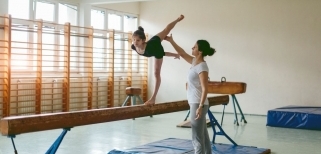
Master the Podium: A Gymnast's Guide to Injury Prevention and Warm-ups (by Sportsperformance Physiotherapy)
The gymnastics arena is a stage where power, flexibility, and precision converge under extreme pressure. Gymnasts push the limits of human movement, subjecting their bodies to immense forces during tumbling passes, holds, and dismounts. This makes them susceptible to unique sports injuries, including wrist ligament sprains, shoulder labral tears, and lower back stress fractures, where a single misstep can have significant consequences.
A comprehensive and specialised dynamic warm-up is therefore not merely a routine; it is a critical component of injury prevention and the key to building the confidence needed to execute high-risk elements. The following is the full-body dynamic warm-up protocol for gymnasts.
Why Gymnastics Demands a Full Body Dynamic Warm-up?
Gymnastics requires every joint—from the wrists to the ankles—to possess an optimal blend of extreme mobility and rock-solid stability. The warm-up must prepare the body for this dual demand, activating the stabilisers around hypermobile joints.
[The Gymnastics-Specific Dynamic Warm-up Protocol]
1. Wrist Preparation — Dynamic Wrist Stretches:
- Purpose: To prepare the ligaments and tendons of the wrist for the high-impact loads of weight-bearing skills (vault, floor, pommel horse), helping to prevent sprains and tendonitis.
- How-to:
- Start in a quadruped position (on all fours). With fingers pointing towards your knees, gently rock back and forth to stretch the wrist's palmar side.
- Then, place your palms flat with fingers pointing outwards, and gently lean to stretch different angles.
- Perform 8-10 controlled reps in each position.

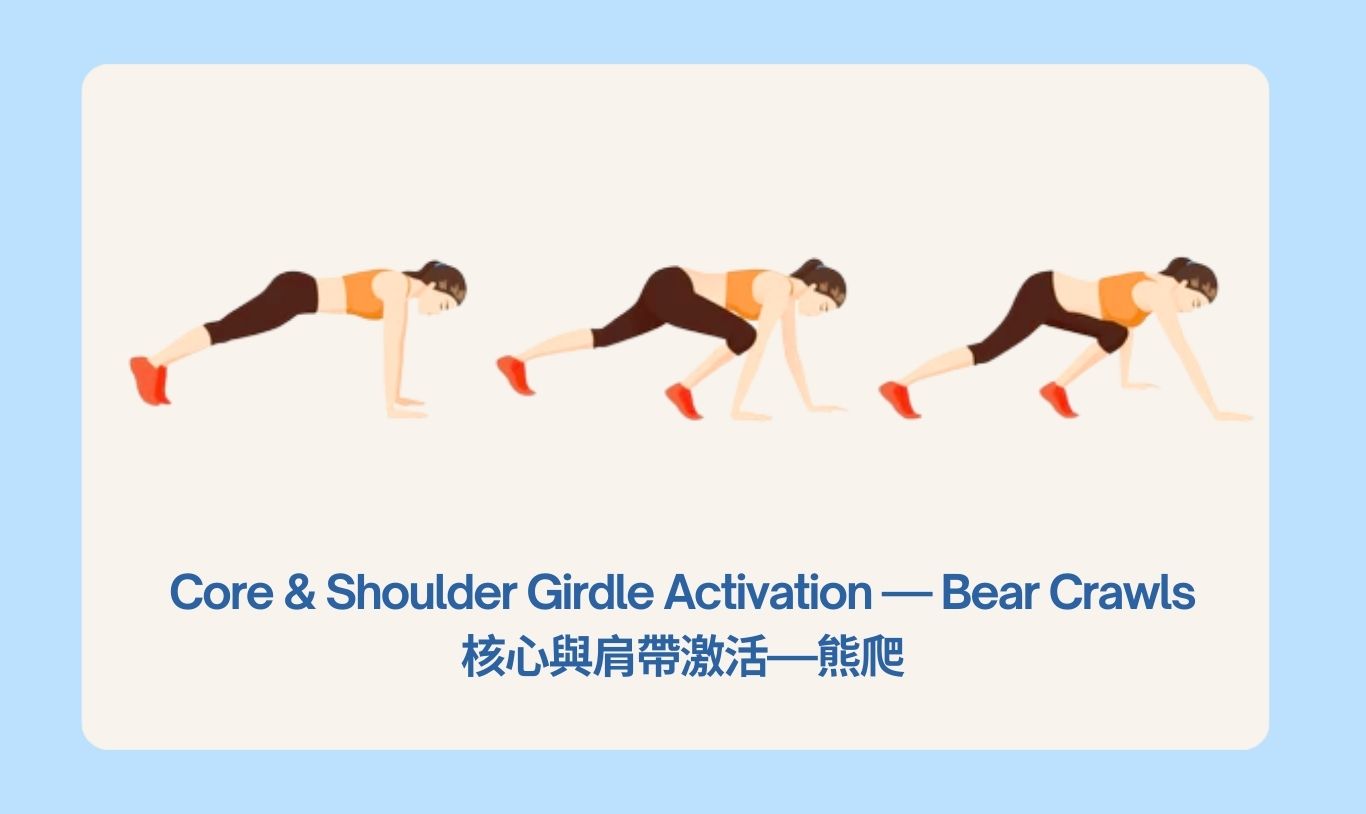
2. Core & Shoulder Girdle Activation — Bear Crawls:
- Purpose: To build cross-body coordination and dynamic stability in the core, shoulders, and wrists, directly mimicking the foundational support patterns used on the floor and beam.
- How-to:
- Maintain a tabletop position with a flat back and engaged core.
- Crawl forward, backwards, or laterally, moving opposite hands and feet simultaneously.
- Focus on controlled movement and preventing any sagging or hiking of the hips.
- Continue for 30-60 seconds.
3. Spinal Dynamic Mobilisation — Cat-Cow:
- Purpose: To dynamically warm up the entire spine, enhancing the flexion and extension mobility in the thoracic and lumbar spine required for skills like back walkovers and landing absorption.
- How-to:
- In a quadruped position, inhale as you drop your belly, arching your spine and looking up slightly (Cow pose).
- Exhale as you round your spine towards the ceiling, tucking your chin to your chest (Cat pose).
- Flow smoothly between the two poses for 10-15 repetitions, focusing on articulating each vertebra.

4. Lower Body Dynamic Stability — Lunge with Thoracic Rotation:
- Purpose: To warm up the hips and knees while challenging dynamic balance and trunk rotation control, which is essential for stable landings from dismounts and complex manoeuvres on the balance beam.
- How-to:
- Step forward into a lunge. In the bottom position, while keeping your pelvis stable, rotate your torso toward your front leg and reach your arms across your body.
- Return to the centre and push back to the starting position. Perform 8-10 controlled reps per side.

If you need a warm-up tailored to a specific apparatus (e.g., Rings, Parallel Bars) or are managing a specific concern, or need to restore optimal physical health, you should make an appointment to seek advice from a professional physiotherapist or medical expert to obtain a proper diagnosis and appropriate treatment. Let us help you stick your landings and perform with confidence.
Further reading: