




Health Information


Dynamic Warm-ups to Prevent Injury for Track Athletes

Dynamic Warm-ups to Prevent Injury for Track Athletes (by Sportsperformance Physiotherapy)
For any athlete preparing for the track and field contests, the athletics track is where dreams are realised in bursts of speed and power. Athletics is the ultimate test of explosive strength, but the high-impact nature of sprinting, jumping, and throwing places immense stress on the body. Common sports injuries like hamstring strains, ankle sprains, and "jumper's knee" (patellar tendinitis) often stem from an inadequate or incorrect warm-up.
A specialised dynamic warm-up is not just about injury prevention; it's about priming your nervous system to enhance starting block explosion and maximise jump height. The following specific warm-up protocols are designed for athletic elites and prevent injury.
Why do athletics athletes need a "dynamic warm-up"?
Static stretching (holding a stretch) can temporarily relax muscles and may dampen explosive power. The goal of a pre-competition routine is to elevate heart rate, increase blood flow to muscles, and raise core temperature using movement patterns that mimic your sport. Dynamic warm-ups are the definitive answer.
[The Athletics-Specific Dynamic Warm-up Protocol]
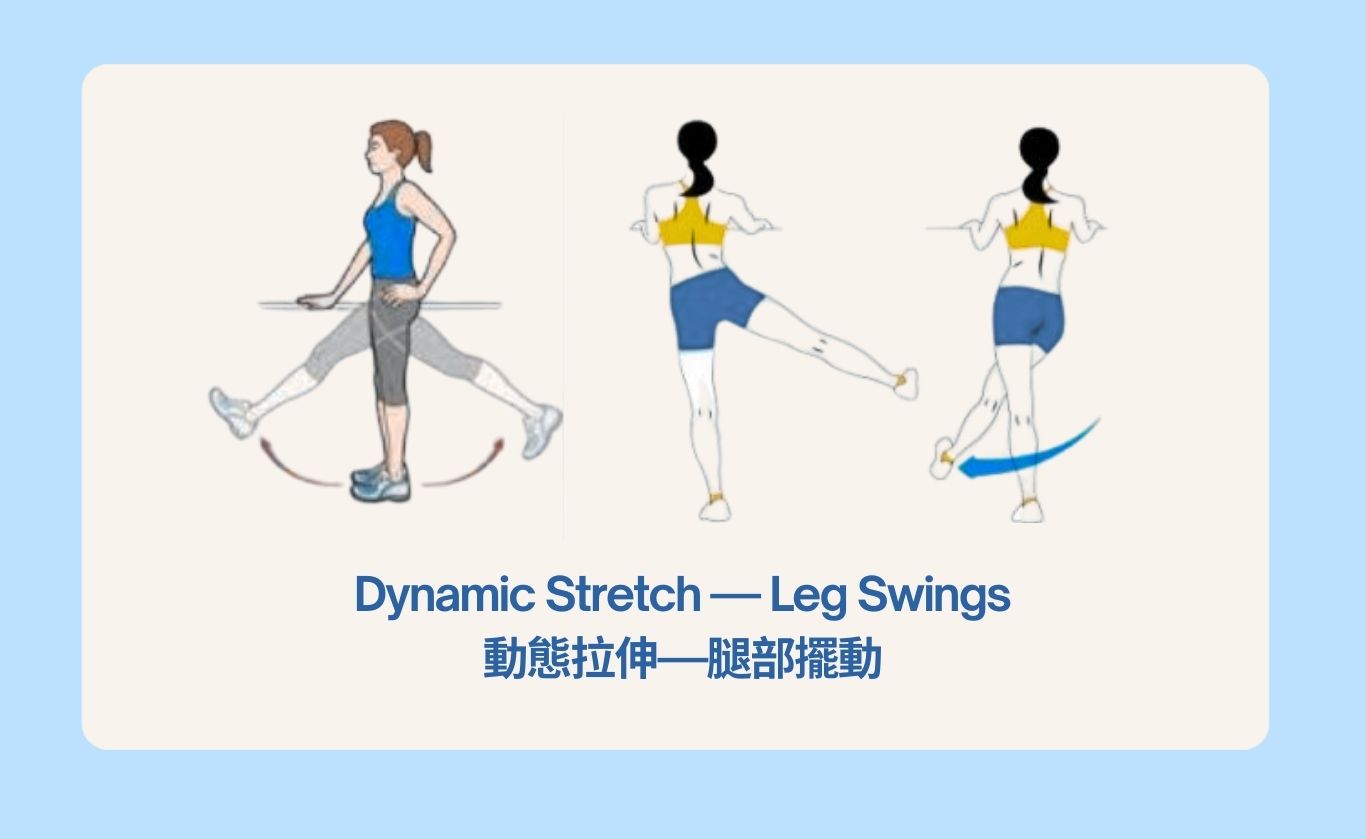
1. Dynamic Stretch — Leg Swings:
- Purpose: To significantly increase hip mobility and prevent groin and hamstring pulls.
- How-to: Hold onto a wall or fence for balance. Swing one leg forward and backwards in a controlled pendulum motion (10-15 reps). Then, swing the same leg across your body from side to side (10-15 reps). Switch legs.
2. Dynamic Stretch — Walking Knee Hugs:
- Purpose: To activate the hip flexors and core muscles while dynamically stretching the glutes and hamstrings, improving stride length.
- How-to: Walk forward slowly. As you step, lift your knee toward your chest, grabbing your shin with both hands and pulling it gently closer. Hold for a second before releasing and stepping forward to repeat with the opposite leg. Continue for 10-12 reps per side.

3. Neuromuscular Activation — A-Skips:
- Purpose: To develop ground reaction force, rhythm, and ankle stiffness—the foundation of speed and power in running and jumping.
- How-to: Skip forward by driving your knee upward to hip height while the opposite arm drives forward. The key is a quick, powerful "pop" off the ground with the supporting foot, focusing on fast, rhythmic movements rather than height or distance.

4. Sport-Specific Primer — Build-up Sprints:
- Purpose: To acclimate your nervous system and fast-twitch muscle fibres to maximal contraction intensity.
- How-to: Perform 3-4 progressive acceleration runs over 50-60 meters. Start at 60% intensity, build to 80%, then 90%, and finish the last run at 95% of your maximum effort.

Train Smart to Perform Your Best:
Integrating this dynamic warm-up into your daily regimen builds a powerful shield against injury on your road to the National Games.
If you want to address personal weaknesses, experience any sport-related injuries or need to restore optimal physical health, you should make an appointment to seek advice from a professional physiotherapist or medical expert to obtain a proper diagnosis and appropriate treatment. Let us help you compete at your peak and free from pain.
Further reading: